

Have questions or want to find out more?
Explore the program framework, logistics, and critical research components for building IND-ready radiotherapies.
Targeted cancer therapies often face limited efficacy due to low tumor uptake, resistance mechanisms, and high development costs. Meanwhile, molecular radiotherapy (MRT) offers precise tumor targeting with cytotoxic radiation, but few clinical candidates exist. Many oncology teams struggle to bridge the gap between a promising small molecule and a strong radiotherapeutic lead, missing the chance to extend IP, improve outcomes and diversify pipelines.
We have established a proven framework for selecting and assessing cancer drugs with favourable biodistribution and target specificity to become radiopharmaceutical candidates. Learn how to analyze drug structure, binding affinity, and pharmacokinetic profiles to predict when radiolabelling may be successful.
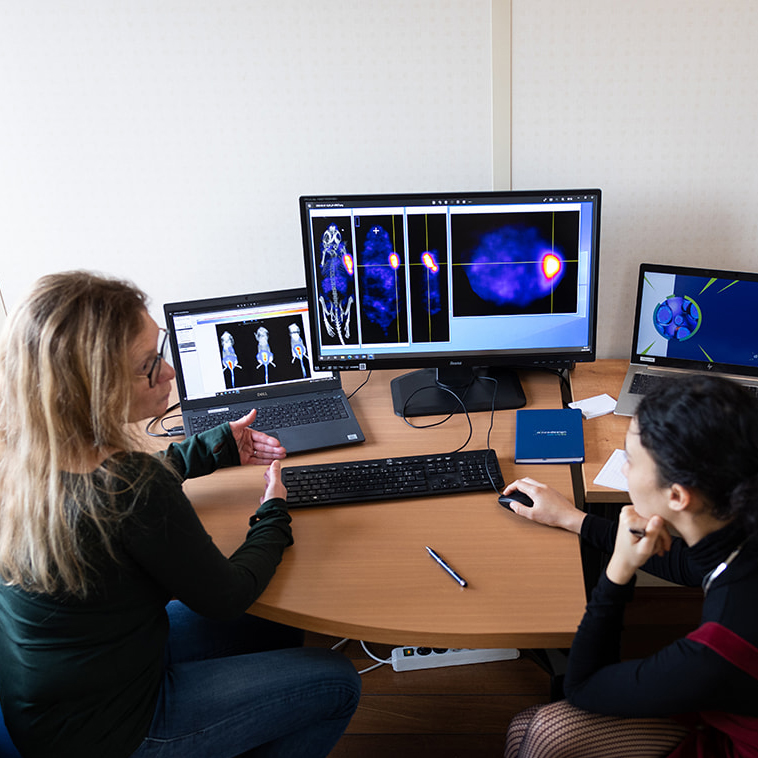
Next, we’ll explore in vivo validation using multimodal imaging (PET/SPECT, MRI, optical) to guide candidate prioritization. You’ll uncover best practices for measuring biodistribution, dosimetry and early efficacy. Plus, see how integrated CRO partnerships streamline translation, from construct design to IND-ready radiopharmaceutical candidates.
View this webinar to learn how molecular radiotherapy works and why it’s gaining momentum in oncology.

Eftychia Koumarianou, PhD.
Head of Pharmaco-Imaging and Molecular Radiotherapy Department
Eftychia brings over 20 years of international experience in nuclear medicine, radiopharmaceutical development, and translational oncology research. Prior to joining Oncodesign Services, she held key roles at ABX-CRO and Advanced Accelerator Applications, contributing to the development of therapies such as Lutathera®. Dr. Koumarianou holds a Ph.D. from the University of Athens and has conducted postdoctoral research at institutions including Demokritos, Polatom, Duke University and Duke-NUS Medical School.