


Evaluate therapeutic activity in autoimmune disease and system inflammation models.
Oncodesign Services provides established autoimmune disease models for arthritis, multiple sclerosis, GvHD, immune thrombocytopenia and systemic inflammation response syndrome (SIRS), alongside custom model development.
Our scientists can help you select and tailor the appropriate model, study design and endpoints, enabling meaningful evaluation of disease mechanisms, pharmacological activity and treatment response.
Measuring immune activity and disease pathology
Autoimmune diseases are triggered by dysregulated activation of immune cells, which can sometimes be linked to genetic causes. Autoimmune disease mouse models and rat models are helpful in deciphering the disease triggering or sustaining mechanisms observed in patients.
Typical readouts for preclinical autoimmune disease studies:
- Clinical scoring
- Body weight
- Histopathology
- Biomarker/drug monitoring
- Gene expression in relevant tissues, by qPCR / dPCR
- Cytokine profiling
- Immune cell profiling by flow cytometry
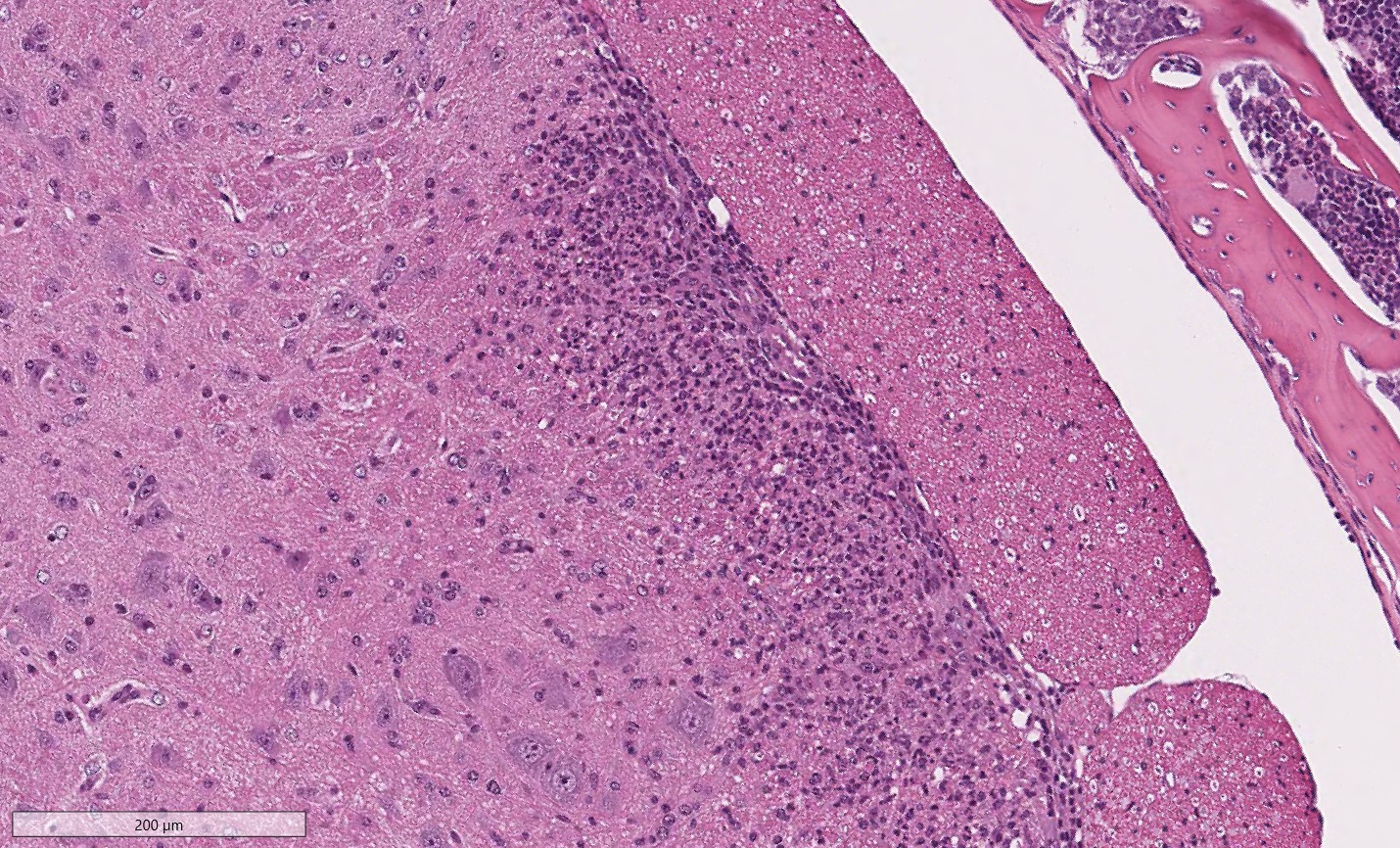
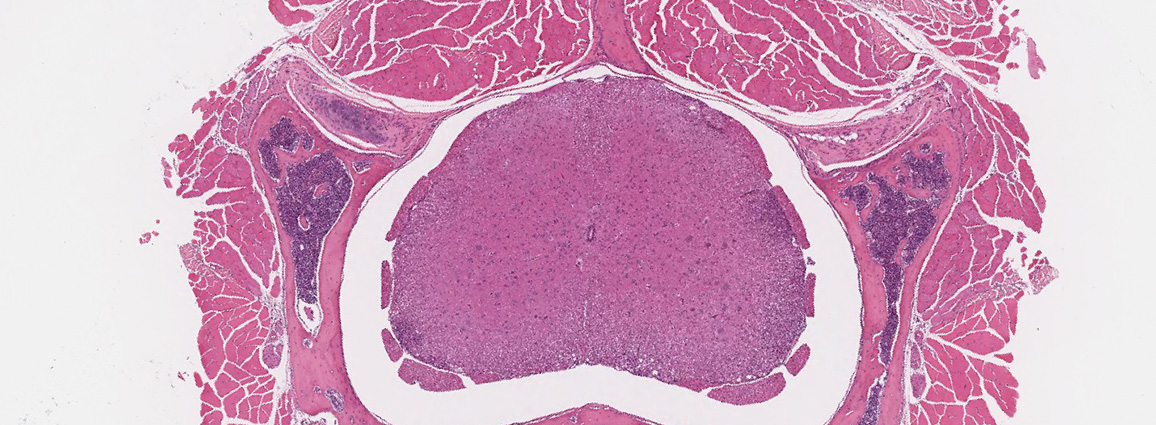
A zoomed view of multiple sclerosis MOG-induced spine pathology image with H&E stain. Mixed inflammatory cells can be seen with neutrophil infiltrates, vacuolation of the white matter with axonal fragments and apoptotic cells.
Established autoimmune disease models available for preclinical studies:
-
Arthritis
We offer the collagen-induced arthritis model in both mice and rats. These complementary models support the investigation of different aspects of joint inflammation and autoimmunity:
- Collagen-induced arthritis in mice (1)
- Collagen-induced arthritis in rats (2)
-
Multiple Sclerosis
Our EAE multiple sclerosis models reproduce acute and relapsing-remitting patterns of disease using MOG₃₅₋₅₅ or PLP₁₃₉₋₁₅₁ immunization. These complementary models support the investigation of disease mechanisms and therapeutic effects across distinct patterns of disease progression.
- Acute experimental autoimmune encephalomyelitis (EAE) / Multiple sclerosis (MS) model in mice
- MOG35-55 peptide induced (3)
- Remitting-relapsing experimental autoimmune encephalomyelitis (EAE) / Multiple sclerosis (MS) model in mice
- PLP139-151 peptide induced (4)
- Acute experimental autoimmune encephalomyelitis (EAE) / Multiple sclerosis (MS) model in mice
-
Graft-vs-Host Disease (GvHD)
Our GvHD portfolio includes allogeneic mouse models and xenogeneic model using human PBMCs engrafted into NOG mice. This provides options for assessing conventional therapies as well as human-specific therapeutic approaches.
- Graft-versus-host disease (1), allogeneic (mouse on mouse, cross-reactive strains)
- Graft-versus-host disease, xenogeneic (human PBMC in immunosuppressed mice)
-
Thromboctyopenia
We offer the CD41 antibody-induced immune thrombocytopenia model in mice. This model supports the investigation of different aspects of platelet immune-mediated destruction, immune mechanisms, and recuperation:
- Immune thrombocytopenia induced by anti-CD41 antibody administration, in mice
-
SIRS (Systemic Inflammation Response Syndrome) Hypothermia Model
We offer a systemic inflammation response syndrome, based on the combination of TNFa and a pan-caspase inhibitor, suitable for people investigating SIRS interventions or more in need of screening of compounds targeting the TNFa pathway. This model supports a rapid evaluation of clinical manifestations as well as cytokine release quantifications:
- TNFalpha induced hypothermia
- SIRS model
- Systemic inflammation response syndrome model
- TNFalpha induced hypothermia
-
Autoimmune Pathway Screening
We offer in vivo screening of compounds in short models recapitulating major cytokinic pathways involved in auto-immunity such as IFNg release following stimulation by IL12 and IL18:
- Systemic IFNg response (3), IL-12/IL-18-induced
Experimental examples for preclinical autoimmune disease model studies
-
Collagen-induced arthritis in rats
Collagen-induced arthritis in rats is a model of chronic inflammatory synovitis that resembles human rheumatoid arthritis. Genetically susceptible Lewis rats immunized intra-dermally with type II collagen emulsified in Freund’s incomplete adjuvant (prime & boost, 1 week apart) develop polyarthritis within 10-14 days.
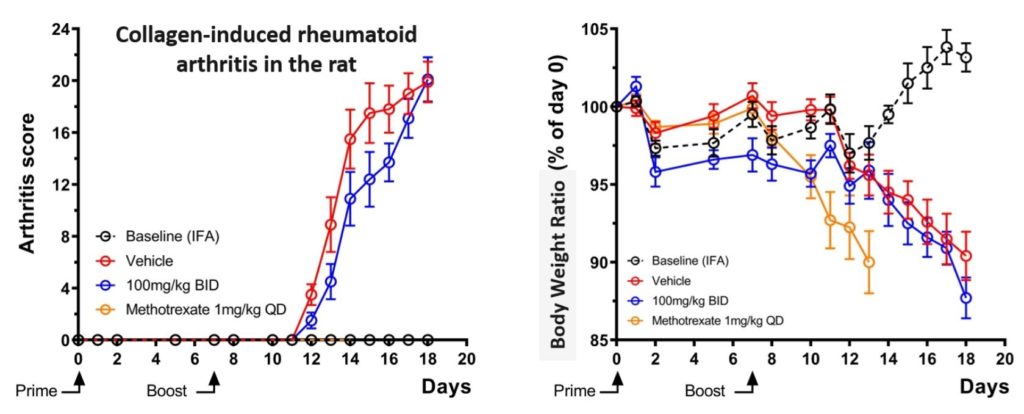
Left: Collagen-induced arthritis score in rats (hind legs). Right: Body weight change from D0 in the collagen induced arthritis model (rats).
-
GvHD in xenogeneic models treated with cyclosporine
Graft-versus host disease (GvHD) is a major inflammatory complication after hematopoietic cell transplantation, with around 50% of patients undergoing GvHD. Xenogeneic GvHD models use human donor cells transplanted into NOG immuno-deficient mice, with monitoring over 30+ days. Cyclosporine can for example be used as a reference compound.
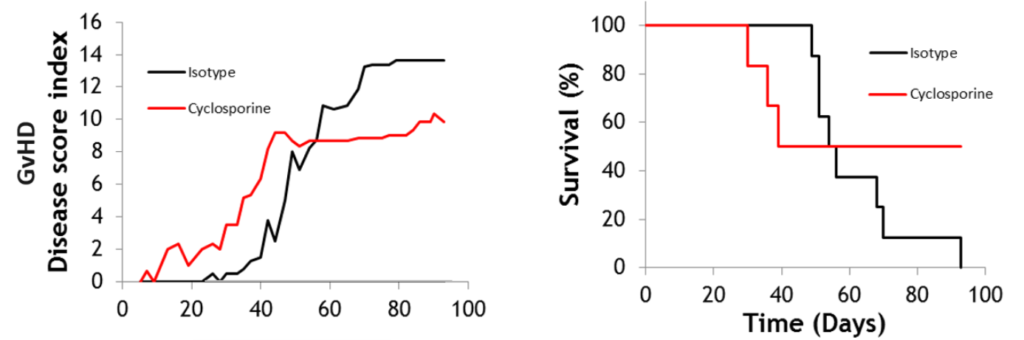
Disease score index (left) and survival rate (right) over time in animals with GvHD with (red) or without (black) cyclosporine treatment.
-
Induction and monitoring of xenogeneic GVHD in NOG mice
NOG mice are transplanted IP with human PBMCs. The analysis of the human (hCD45+) leucocytes and human T cell populations in the blood is performed by flow cytometry and used for longitudinal monitoring of disease progression. The speed of disease progression may vary from donor to donor. Human immune infiltrates are also observed in tissues such as gastro-intestinal tract.
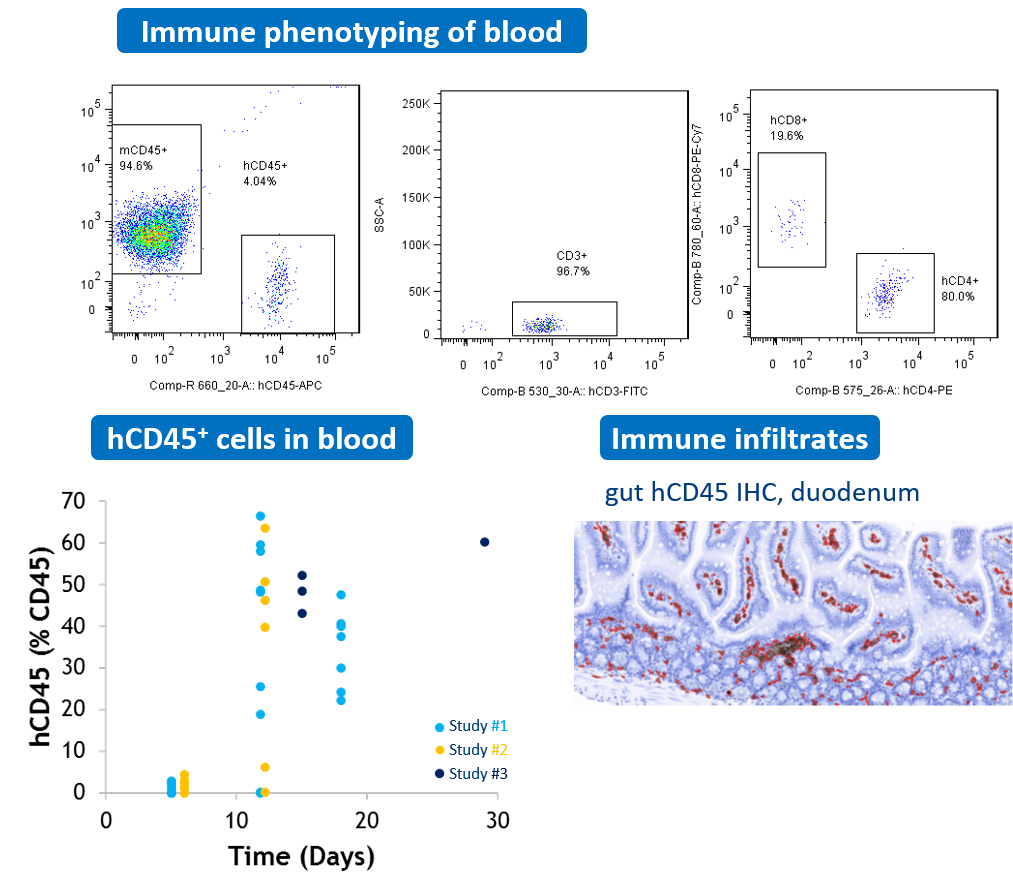
Immune phenotyping of the PBMCs by flow cytometry. Top: gating strategy. Bottom left: evolution of human CD45+ cells in the blood after engraftment – comparison of 3 studies. Bottom right: CD45+ infiltrates in the duodenal tissue (IHC).
Learn more about partnering with Oncodesign Services:
Oncodesign Services combines translational inflammation experience with a flexible approach to preclinical research, supporting both standard and customized study designs. Alongside an extensive portfolio of acute and chronic inflammatory disease models, we offer bespoke model development to address specific scientific questions and emerging therapeutic approaches.
Our scientific team is available to provide guidance from study planning through data interpretation, with comprehensive readouts including histology, clinical scoring, biomarkers, and functional endpoints. Histology samples are also available to support feasibility assessments and model selection before study initiation.
Contact our team to discuss your research objectives, explore the most appropriate models and endpoints, or request a quotation.
Oncodesign Services (ODS) has been a trusted preclinical partner for several years. The team consistently demonstrates scientific excellence and reliability, tailoring preclinical protocols to our exact needs.
Their ability to rapidly action and deliver projects has made collaboration in oncology research efficient and straightforward. Clear, responsive communication is crucial to us, and the strong working relationship with our client manager makes coordination very easy.
We appreciate the professionalism, confidence, and flexibility ODS brings to every project.
Oncology Biopharma Organization (Europe)


Frequently asked questions about our autoimmune disease models:
Can autoimmune disease studies be customized?
Yes. Every study is designed to meet your specific research objectives. We can tailor strain, disease induction protocol, treatment schedule, dosing regimen, study duration, biomarkers, and efficacy endpoints to align with your therapeutic strategy.
What endpoints are typically measured with autoimmune disease models?
Endpoints are selected according to the disease model and sponsor objectives and may include:
- Clinical disease scoring
- Body weight and general health monitoring
- Histopathology
- Flow cytometry-based immune profiling
- Cytokine and chemokine analysis
- Autoantibody measurements
- Biomarker analysis
- Pharmacodynamic assessments
- Survival and disease progression
What is an immune thrombocytopenia (ITP) model used for?
Preclinical ITP models are used to study immune-mediated platelet destruction and impaired platelet production. They are valuable for evaluating therapies aimed at increasing platelet counts, reducing autoantibody-mediated platelet clearance, and modulating immune responses.
Do you support combination therapy studies?
Yes. We can design studies to evaluate combination therapies, compare investigational compounds with standard-of-care treatments, or assess different dosing strategies to support preclinical decision-making.
-
References
(1) Collagen-induced arthritis in mice
- Review of models:
Choudhary N, Bhatt LK, Prabhavalkar KS. Experimental animal models for rheumatoid arthritis. Immunopharmacol Immunotoxicol. 2018 Jun;40(3):193-200. doi: 10.1080/08923973.2018.1434793. Epub 2018 Feb 12. PMID: 29433367 : https://www.tandfonline.com/doi/abs/10.1080/08923973.2018.1434793?journalCode=iipi20
- Papers explicating protocols:
Brand DD, Latham KA, Rosloniec EF. Collagen-induced arthritis. Nat Protoc. 2007;2(5):1269-75. doi: 10.1038/nprot.2007.173. PMID: 17546023 : https://www.nature.com/articles/nprot.2007.173
Miyoshi M, Liu S. Collagen-Induced Arthritis Models. Methods Mol Biol. 2018;1868:3-7. doi: 10.1007/978-1-4939-8802-0_1. PMID: 30244448 : https://link.springer.com/protocol/10.1007/978-1-4939-8802-0_1
Bevaart L, Vervoordeldonk MJ, Tak PP. Collagen-induced arthritis in mice. Methods Mol Biol. 2010;602:181-92. doi: 10.1007/978-1-60761-058-8_11. PMID: 20012399 : https://link.springer.com/protocol/10.1007/978-1-60761-058-8_11
- Demonstration of the efficacy of compounds:
Zhang GB, Jia ZJ, Zhang MH, Li YJ, Tian LY, Cheng J. Flaccidoside II ameliorates collagen-induced arthritis in mice. Eur J Pharmacol. 2020 Aug 5;880:173155. doi: 10.1016/j.ejphar.2020.173155. Epub 2020 Apr 30. Erratum in: Eur J Pharmacol. 2021 Apr 15;897:173963. PMID: 32360348 : https://www.sciencedirect.com/science/article/abs/pii/S0014299920302478?via%3Dihub
Liu H, Zhao J, Su M, Tian X, Lai L. Recombinant CD300c-Ig fusion protein attenuates collagen-induced arthritis in mice. Rheumatology (Oxford). 2022 Mar 2;61(3):1255-1264. doi: 10.1093/rheumatology/keab450. PMID: 34021311; PMCID: PMC8889306. : https://academic.oup.com/rheumatology/article-abstract/61/3/1255/6280557?redirectedFrom=fulltext&login=false
Li J, Sun Q, Zheng C, Bai C, Liu C, Zhao X, Deng P, Chai L, Jia Y. Lipoxin A4-Mediated p38 MAPK Signaling Pathway Protects Mice Against Collagen-Induced Arthritis. Biochem Genet. 2021 Feb;59(1):346-365. doi: 10.1007/s10528-020-10016-9. Epub 2020 Nov 22. PMID: 33221976. : https://link.springer.com/article/10.1007/s10528-020-10016-9
(2) Collagen-induced arthritis in rats
- Review of models:
Choudhary N, Bhatt LK, Prabhavalkar KS. Experimental animal models for rheumatoid arthritis. Immunopharmacol Immunotoxicol. 2018 Jun;40(3):193-200. doi: 10.1080/08923973.2018.1434793. Epub 2018 Feb 12. PMID: 29433367 : https://www.tandfonline.com/doi/abs/10.1080/08923973.2018.1434793?journalCode=iipi20
- Papers explaining protocols:
Griffiths MM, Cannon GW, Corsi T, Reese V, Kunzler K. Collagen-induced arthritis in rats. Methods Mol Med. 2007;136:201-14. doi: 10.1007/978-1-59745-402-5_15. PMID: 17983150 : https://pubmed.ncbi.nlm.nih.gov/17983150/
- Demonstration of the efficacy of compounds:
Gao Q, Qin H, Zhu L, Li D, Hao X. Celastrol attenuates collagen-induced arthritis via inhibiting oxidative stress in rats. Int Immunopharmacol. 2020 Jul;84:106527. doi: 10.1016/j.intimp.2020.106527. Epub 2020 May 11. PMID: 32402948 : https://www.sciencedirect.com/science/article/pii/S1567576920305324?via%3Dihub
Chen M, You G, Xie C, Yang R, Hu W, Zheng Z, Liu S, Ye L. Pharmacokinetics of metformin in collagen-induced arthritis rats. Biochem Pharmacol. 2021 Mar;185:114413. doi: 10.1016/j.bcp.2021.114413. Epub 2021 Jan 9. PMID: 33434538 : https://www.sciencedirect.com/science/article/abs/pii/S0006295221000095?via%3Dihub
Ahmad Khan M, Sarwar AHMG, Rahat R, Ahmed RS, Umar S. Stigmasterol protects rats from collagen induced arthritis by inhibiting proinflammatory cytokines. Int Immunopharmacol. 2020 Aug;85:106642. doi: 10.1016/j.intimp.2020.106642. Epub 2020 May 26. PMID: 32470883. : https://www.sciencedirect.com/science/article/pii/S1567576920300254?via%3Dihub
(3) Acute experimental autoimmune encephalomyelitis (EAE) / Multiple sclerosis (MS) model in mice, MOG35-55 peptide induced
- Methods:
Bittner S, Afzali AM, Wiendl H, Meuth SG. Myelin oligodendrocyte glycoprotein (MOG35-55) induced experimental autoimmune encephalomyelitis (EAE) in C57BL/6 mice. J Vis Exp. 2014 Apr 15;(86):51275. doi: 10.3791/51275. PMID: 24797125; PMCID: PMC4172026. https://www.jove.com/t/51275/myelin-oligodendrocyte-glycoprotein-mog35–55-induced-experimental-autoimmune-encephalomyelitis-eae-in-c57bl/6-mice
Aharoni R, Globerman R, Eilam R, Brenner O, Arnon R. Titration of myelin oligodendrocyte glycoprotein (MOG) – Induced experimental autoimmune encephalomyelitis (EAE) model. J Neurosci Methods. 2021 Mar 1;351:108999. doi: 10.1016/j.jneumeth.2020.108999. Epub 2020 Nov 12. PMID: 33189793. https://www.sciencedirect.com/science/article/abs/pii/S0165027020304222?via%3Dihub
- Role of immune system:
Weber MS, Prod’homme T, Patarroyo JC, Molnarfi N, Karnezis T, Lehmann-Horn K, Danilenko DM, Eastham-Anderson J, Slavin AJ, Linington C, Bernard CC, Martin F, Zamvil SS. B-cell activation influences T-cell polarization and outcome of anti-CD20 B-cell depletion in central nervous system autoimmunity. Ann Neurol. 2010 Sep;68(3):369-83. doi: 10.1002/ana.22081. PMID: 20641064; PMCID: PMC3375897. https://onlinelibrary.wiley.com/doi/10.1002/ana.22081
Aulova KS, Urusov AA, Sedykh SE, Toporkova LB, Lopatnikova JA, Buneva VN, Sennikov SV, Budde T, Meuth SG, Popova NA, Orlovskaya IA, Nevinsky GA. The association between EAE development in mice and the production of autoantibodies and abzymes after immunization of mice with different antigens. J Cell Mol Med. 2021 Mar;25(5):2493-2504. doi: 10.1111/jcmm.16183. Epub 2021 Feb 9. PMID: 33560578; PMCID: PMC7933958. https://onlinelibrary.wiley.com/doi/10.1111/jcmm.16183
Ruppova K, Lim JH, Fodelianaki G, August A, Neuwirth A. Eosinophils are dispensable for development of MOG35-55-induced experimental autoimmune encephalomyelitis in mice. Immunol Lett. 2021 Nov;239:72-76. doi: 10.1016/j.imlet.2021.09.001. Epub 2021 Sep 6. PMID: 34499922. https://www.sciencedirect.com/science/article/abs/pii/S0165247821001425?via%3Dihub
- Treatment testing:
Remlinger J, Madarasz A, Guse K, Hoepner R, Bagnoud M, Meli I, Feil M, Abegg M, Linington C, Shock A, Boroojerdi B, Kiessling P, Smith B, Enzmann V, Chan A, Salmen A. Antineonatal Fc Receptor Antibody Treatment Ameliorates MOG-IgG-Associated Experimental Autoimmune Encephalomyelitis. Neurol Neuroimmunol Neuroinflamm. 2022 Jan 13;9(2):e1134. doi: 10.1212/NXI.0000000000001134. PMID: 35027475; PMCID: PMC8759074. https://nn.neurology.org/content/9/2/e1134.long
(4) Remitting-relapsing experimental autoimmune encephalomyelitis (EAE) / Multiple sclerosis (MS) model in mice, PLP139-151 peptide induced
- Methods :
Laaker C, Hsu M, Fabry Z, Miller SD, Karpus WJ. Experimental Autoimmune Encephalomyelitis in the Mouse. Curr Protoc. 2021 Dec;1(12):e300. doi: 10.1002/cpz1.300. Erratum in: Curr Protoc. 2022 Aug;2(8):e554. PMID: 34870897. https://currentprotocols.onlinelibrary.wiley.com/doi/10.1002/cpz1.300
- Involvement of the immune system:
Pascual DW, Ochoa-Repáraz J, Rynda A, Yang X. Tolerance in the absence of autoantigen. Endocr Metab Immune Disord Drug Targets. 2007 Sep;7(3):203-10. doi: 10.2174/187153007781662549. PMID: 17897047; PMCID: PMC9811400. https://www.eurekaselect.com/article/23708
- Role of exercise:
Fainstein N, Tyk R, Touloumi O, Lagoudaki R, Goldberg Y, Agranyoni O, Navon-Venezia S, Katz A, Grigoriadis N, Ben-Hur T, Einstein O. Exercise intensity-dependent immunomodulatory effects on encephalomyelitis. Ann Clin Transl Neurol. 2019 Sep;6(9):1647-1658. doi: 10.1002/acn3.50859. Epub 2019 Aug 1. PMID: 31368247; PMCID: PMC6764499. https://www.ncbi.nlm.nih.gov/pmc/articles/PMC6764499/
- Role of microbiota:
Shahi SK, Ghimire S, Lehman P, Mangalam AK. Obesity induced gut dysbiosis contributes to disease severity in an animal model of multiple sclerosis. Front Immunol. 2022 Sep 9;13:966417. doi: 10.3389/fimmu.2022.966417. PMID: 36164343; PMCID: PMC9509138. https://www.frontiersin.org/articles/10.3389/fimmu.2022.966417/full
- Testing of treatments:
Fagone P, Mangano K, Quattrocchi C, Motterlini R, Di Marco R, Magro G, Penacho N, Romao CC, Nicoletti F. Prevention of clinical and histological signs of proteolipid protein (PLP)-induced experimental allergic encephalomyelitis (EAE) in mice by the water-soluble carbon monoxide-releasing molecule (CORM)-A1. Clin Exp Immunol. 2011 Mar;163(3):368-74. doi: 10.1111/j.1365-2249.2010.04303.x. Epub 2011 Jan 14. PMID: 21235533; PMCID: PMC3048621. https://academic.oup.com/cei/article/163/3/368/6428930?login=false
Al-Mazroua HA, Nadeem A, Ansari MA, Attia SM, Bakheet SA, Albekairi TH, Ali N, Alasmari F, Algahtani M, Alsaad AMS, Ahmad SF. CCR1 antagonist ameliorates experimental autoimmune encephalomyelitis by inhibition of Th9/Th22-related markers in the brain and periphery. Mol Immunol. 2022 Apr;144:127-137. doi: 10.1016/j.molimm.2022.02.017. Epub 2022 Feb 24. PMID: 35219910 https://www.sciencedirect.com/science/article/abs/pii/S0161589022000463?via%3Dihub
Legge KL, Bell JJ, Li L, Gregg R, Caprio JC, Zaghouani H. Multi-modal antigen specific therapy for autoimmunity. Int Rev Immunol. 2001 Oct;20(5):593-611. doi: 10.3109/08830180109045580. PMID: 11890614
https://www.tandfonline.com/doi/abs/10.3109/08830180109045580