April 17 – 22, 2026

At the AACR Annual Meeting 2026, discussions will centre on how to generate preclinical oncology data that supports successful funding milestones and enables confident development decisions.
We will be available to discuss how robust preclinical pharmacology can strengthen candidate validation by enabling detailed interrogation of mechanism, biodistribution, and therapeutic impact in clinically relevant settings. From model selection through to translational study design, the focus is on generating data that reduces uncertainty, supports informed decision-making, and clarifies next steps toward the clinic.

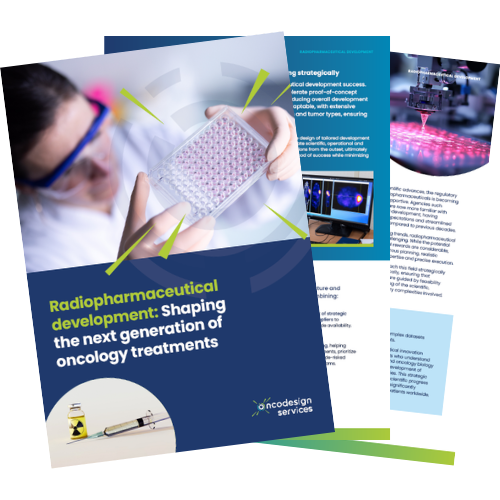
We are joined at the meeting by our Head of Radiotherapy and Pharmaco-Imaging, reflecting the growing role of targeted radiopharmaceuticals as a powerful pathway for validated cancer candidates.
Book a meeting and visit our booth (#3442) to explore how a scientifically rigorous approach to preclinical evaluation can help advance oncology programmes with clarity and confidence.
Not affiliated with or endorsed by AACR.
Meet Our Team
 |
 |
 |
 |
| Marc Hillairet De Boisferon, PhD | Eftychia Koumarianou, PhD | Teri Slack, PhD, MBA | Cédric Lamy, PhD |
| Head Of Translational Pharmacology | Head of Pharmaco-Imaging & Molecular Radiotherapy | Director, Business Development, North America, West Coast | Chief Business Officer |
Download Digital Posters
Integrated comprehensive in vitro and in vivo strategies for antibody drug conjugate development
Session category: Experimental and Molecular Therapeutics
Session title: Antibody-Drug Conjugates and Linker Engineering 2
Abstract: Antibody–drug conjugates (ADCs) enable targeted delivery of cytotoxic payloads but require robust preclinical strategies to ensure clinical translation. We describe an integrated platform combining in vitro binding and internalization assays with pharmacokinetics, pharmacodynamics, and efficacy studies in translational models. Functional assays assess target engagement, payload activity, and tumor cell killing. A portfolio of over 500 tumor models, including PDX, syngeneic, and humanized models, supports in vivo evaluation. Molecular imaging approaches further enable biodistribution and target validation. This platform facilitates efficient identification and optimization of ADC candidates with improved translational potential.
Enhancing preclinical insights in immuno-oncology with humanized mice
Session category: Tumor Biology
Session title: Humanized Mouse Models
Abstract: Immune cells within the tumor microenvironment are key therapeutic targets, yet conventional models often fail to translate due to interspecies differences. Humanized mouse models, generated using PBMC or HSC engraftment, enable in vivo study of human immune biology and tumor–immune interactions. Combined with human tumor cell lines or patient-derived xenografts, these models support evaluation of immunotherapies, including checkpoint inhibitors, adoptive cell therapies, and oncolytic viruses. Here, we present tumor growth and immune profiling data across subcutaneous and disseminated models, alongside optimized randomization strategies and key efficacy readouts. These platforms provide a robust, translationally relevant approach for preclinical assessment of immune-oncology candidates.
A fully integrated set of in vitro and in vivo tools for utilization of micro-organisms as new therapeutic weapons against cancer
Session category: Clinical Research
Session title: Vaccines and Other Immunomodulatory Agents
Abstract: Micro-organisms such as viruses and bacteria are emerging as promising oncology therapeutics, combining direct tumor targeting with immune activation. Genetic engineering enables reduced virulence and enhanced therapeutic function, including expression of antigens, chemokines, or immune-engaging proteins. These agents can selectively colonize tumors and, alone or in combination with other therapies, drive significant antitumor responses. We present preclinical approaches using a broad range of in vitro studies and syngeneic, CDX, and humanized models to evaluate efficacy and mechanism of action. Complementary assays assess immune modulation, tumor burden, and microorganism distribution, supporting translational development of micro-organism-based cancer therapies.
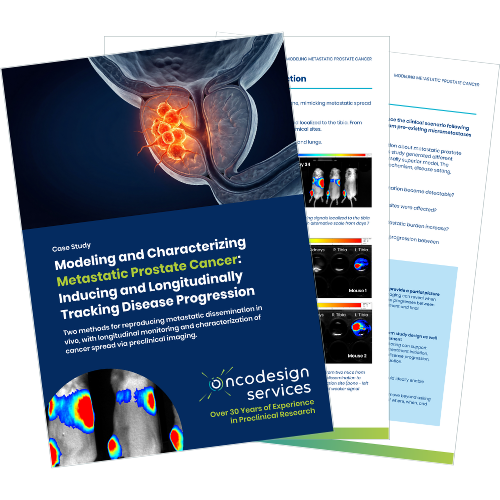
In vivo metastatic prostate tumor model development and follow-up progression using in vivo bioluminescence imaging
Session category: Tumor Biology
Session title: Tumor Models and Assays: In Vitro, In Vivo
Abstract: Prostate cancer is the most frequently diagnosed malignancy in men and a leading cause of cancer-related death, with metastatic disease associated with poor survival. However, few preclinical models recapitulate advanced stages. Here, we describe a metastatic model in immunodeficient male mice using 22Rv1-Luc-mCherry cells delivered via intratibial or intra-arterial injection. Tumor progression was monitored by in vivo bioluminescence imaging, with ex vivo confirmation at endpoint. Intratibial inoculation led to liver and lung metastases, while intra-arterial delivery resulted in dissemination to bone and liver. This model captures key features of late-stage disease, supporting preclinical evaluation of novel therapeutics.