


How scratching behavior influences model selection and reveals treatment effects beyond inflammatory biomarkers.
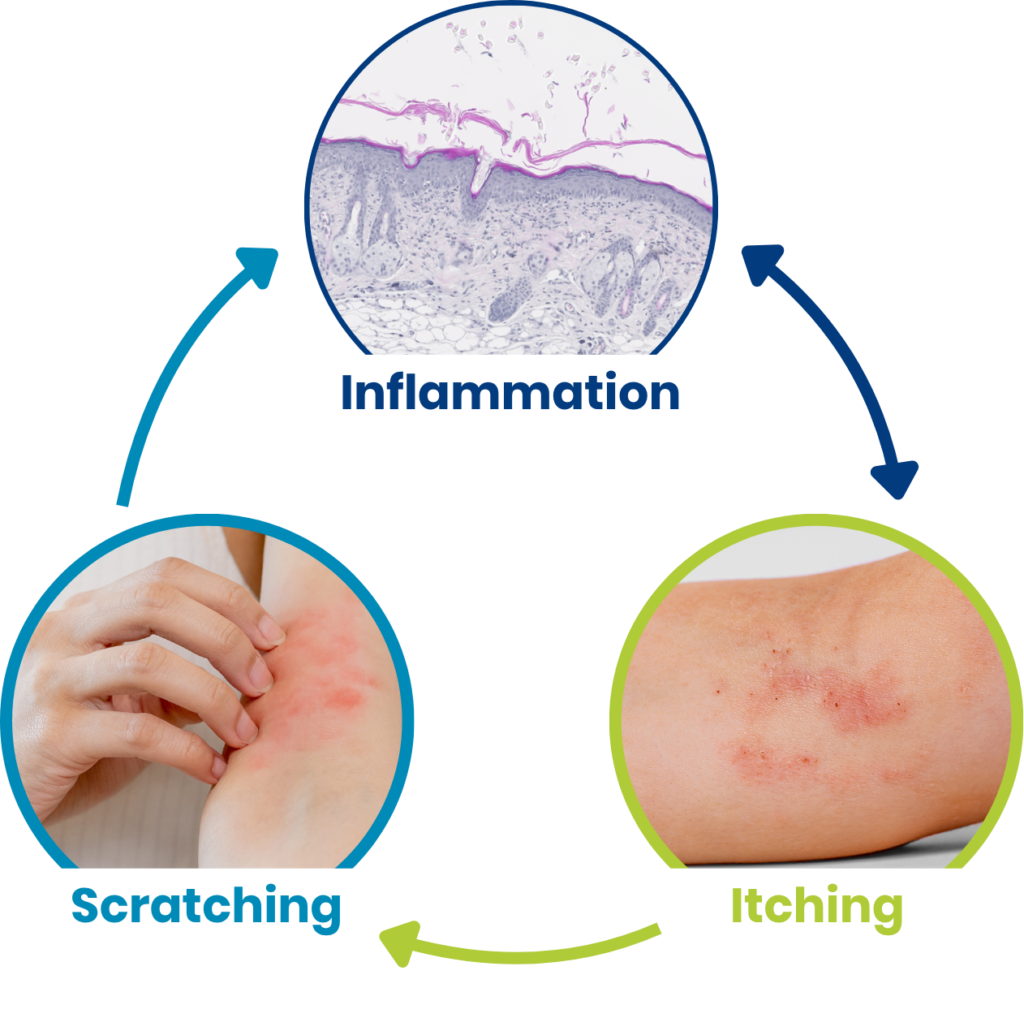 Pruritus, or itch, is one of the most burdensome symptoms experienced by patients with atopic dermatitis and is mechanistically involved in disease progression. Immune activation stimulates sensory neurons and triggers itch sensations, following which neuromediators (such as substance P) secreted by sensory neurons recruit inflammatory cells. Additionally, scratching damages the skin barrier and promotes further inflammatory signaling, enhancing the self-amplifying cycle of inflammation and pruritus.
Model selection in preclinical research is typically guided by the ability to reproduce established features of disease. In atopic dermatitis research, that may mean skin lesions, epidermal thickening, immune cell infiltration or increased expression of inflammatory cytokines (e.g. IL-4, IL-5, IL13, IL-31, TSLP) or release of IgE. For researchers developing a treatment for atopic dermatitis, investigating whether a therapeutic intervention can disrupt the inflammation-pruritus cycle is critical, and measuring inflammation biomarkers alone may provide an incomplete picture of efficacy.
Introducing scratching behavior as a functional endpoint can help address this gap. However, it can also influence research model requirements and subsequent selection.
This article will cover:
1. Experimental methodology for measuring scratching behavior.
2. Model strain selection that balances biomarker and functional suitability.
3. Study data comparing perceived treatment efficacy using only biomarker data against the same compound with the addition of functional data.
Experimental methodology for measuring scratching in a preclinical setting.
Unlike clinical studies, where patients can report the severity of their itch, preclinical studies require an objective measure of the behavior associated with pruritus.
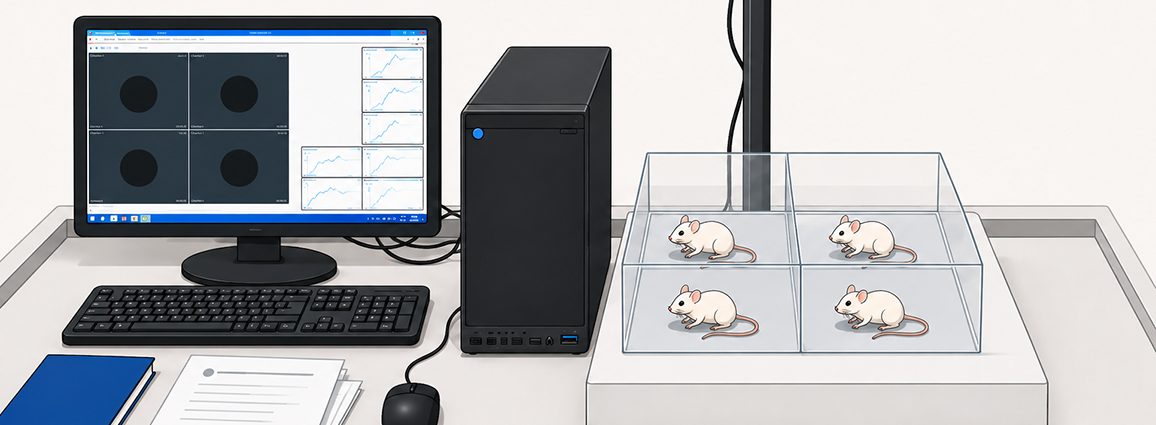
In this experiment, individual mice are placed in separate chambers within a four-compartment Plexiglas enclosure positioned on an infrared platform. An infrared HD camera records the mice at 120 frames per second, allowing the rapid movements associated with scratching to be detected and distinguished from other behaviors.
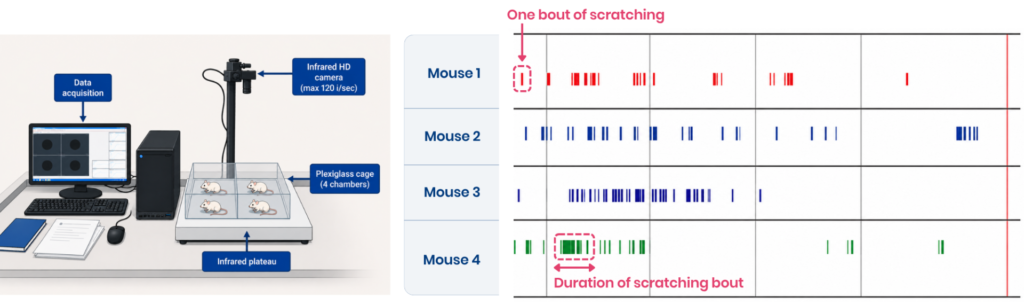
The resulting data are presented as an ethogram, with scratching events recorded over time for each animal. This allows researchers to quantify both the number of scratching bouts and the total duration of scratching during the recording period.
Generating reliable behavioral data requires careful control of experimental conditions. Mice are habituated to the recording environment in advance of data collection to reduce reactionary behavior to a new environment. Recording sessions can also be analyzed in separate time intervals, as differences between challenged and control animals may become clearer once the initial response to being placed in the experimental environment has subsided.
External sources of stress must also be carefully managed. Consistency in the personnel handling the animals can help limit variability associated with the manipulator, while environmental conditions such as noise and unfamiliar smells should be controlled wherever possible. Mice can detect ultrasonic frequencies beyond the range of human hearing, meaning equipment or other sources of noise that appear unobtrusive to researchers may still affect behavior. Standardizing these conditions, alongside factors such as the time of day and timing of procedures (challenge, treatment, recording) relative to each other, can help minimize stress-related effects and improve the reliability and reproducibility of behavioral data.
Timing relative to disease challenge and treatment administration is equally important. Recording too soon after a topical challenge may capture an acute irritant response rather than the inflammatory itch of interest, while the timing of treatment should allow the expected peak of therapeutic activity to be assessed.
Together, these considerations allow scratching behavior to be quantified as a functional readout alongside conventional measures of disease pathology and inflammation.
Considerations around model selection when combining biomarker-based and functional studies.
Mouse strains can respond differently to both disease induction and behavioral testing, requiring a thoughtful, balanced approach to model selection for atopic dermatitis studies. Here, we compare BALB/c, C57BL/6, and CD-1.
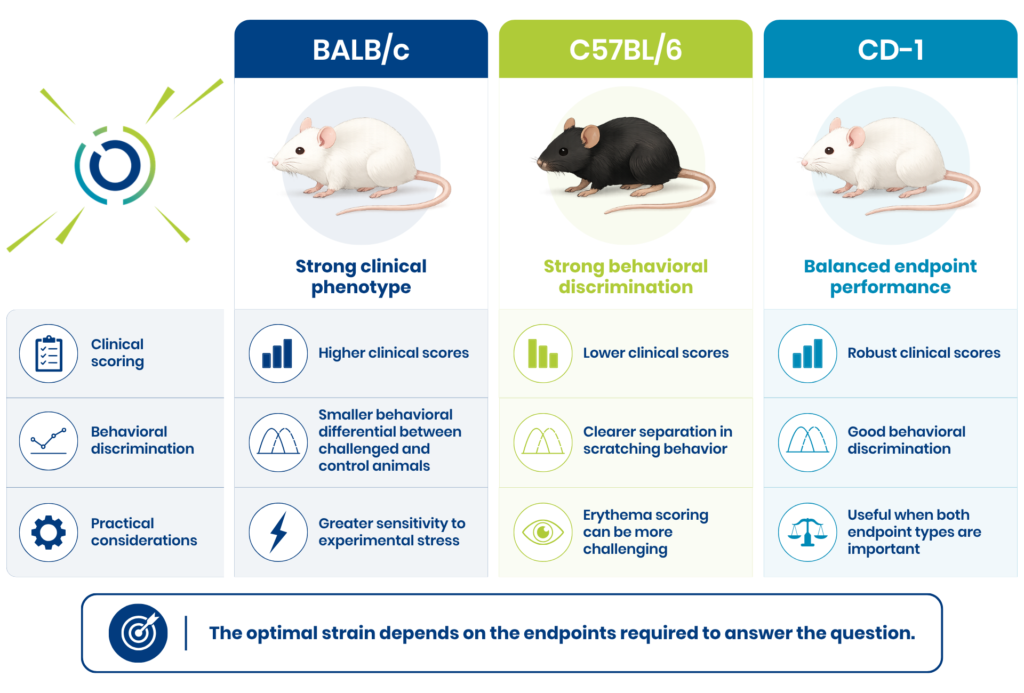
- BALB/c mice can develop strong clinical scores in models of atopic dermatitis. However, they can also be particularly sensitive to stress associated with behavioral recording, resulting in a smaller differential between challenged and control animals.
- C57BL/6 mice can provide a clearer behavioral signal, with greater separation between control and challenged groups. However, clinical scoring can be more challenging, particularly when assessing erythema against darker skin pigmentation.
- CD-1 mice can offer a compromise, combining robust clinical scores with good behavioral discrimination.
This does not make one strain universally superior to another but instead demonstrates why model selection should begin with careful consideration of the experimental question and is an important aspect of effective study design.
To summarize, if the primary objective is to characterize inflammatory pathology, one model may be appropriate. If scratching behavior is a critical efficacy endpoint, the requirements may be different. When both conventional and functional endpoints are needed, researchers may need to balance several characteristics rather than simply selecting the model with the strongest visible phenotype.
Comparing functional and non-functional readouts for topical corticosteroids
The value of functional endpoints becomes particularly apparent when conventional measures of efficacy and scratching behavior are assessed together. A useful example of this is a preclinical study of clobetasol as an atopic dermatitis treatment.
In a DNFB model of contact allergy-induced atopic dermatitis, treatment with the topical corticosteroid clobetasol produced clear improvements across multiple established clinical score-based measures of disease:
- Epidermal and dermal thickening improved.
- Eosinophil infiltration was strongly reduced.
- Serum IgE levels returned towards baseline.
- Expression of Th2-associated cytokines was substantially suppressed.
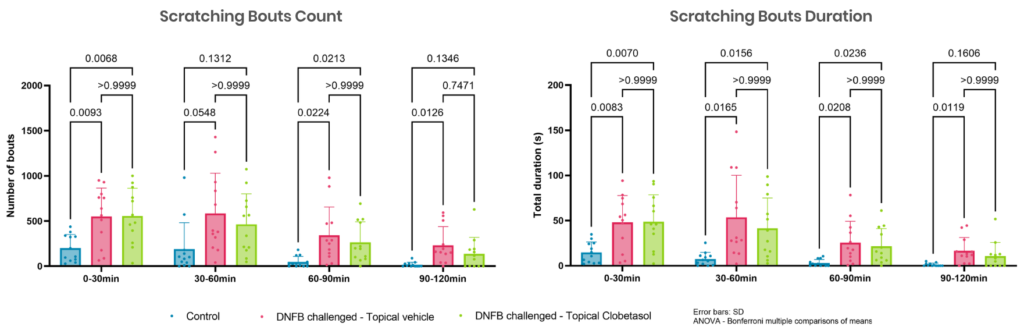
Based on these endpoints alone, the data indicated a strong treatment effect. However, despite a substantial reduction in inflammatory markers, clobetasol produced only an approximately 20–25% reduction in scratching behavior.
Here we see the results of scratching behavior analysis represented in a graph. Challenged with DNFB with no treatment (pink) led to significantly increased scratching behavior (number of bouts and duration) compared to the non-challenged control group (blue). The challenged group treated with clobetasol (green) displayed only a modest reduction in scratching behavior when compared with the untreated group (pink).
This expanded dataset more accurately reflects the clinical efficacy of clobetasol. Topical corticosteroids can substantially improve inflammatory markers while providing more limited relief from pruritus than therapies acting on pathways more directly involved in itch, such as NK1 antagonists, or other types of targeted drugs such as JAK inhibitors.
The functional readout therefore revealed something that the biomarkers did not: the treatment was clearly biologically active, but its effect on an important patient-relevant characteristic of the disease was considerably more modest.
What will your compound ultimately be evaluated on in the clinic, and how can that outcome be meaningfully assessed preclinically?
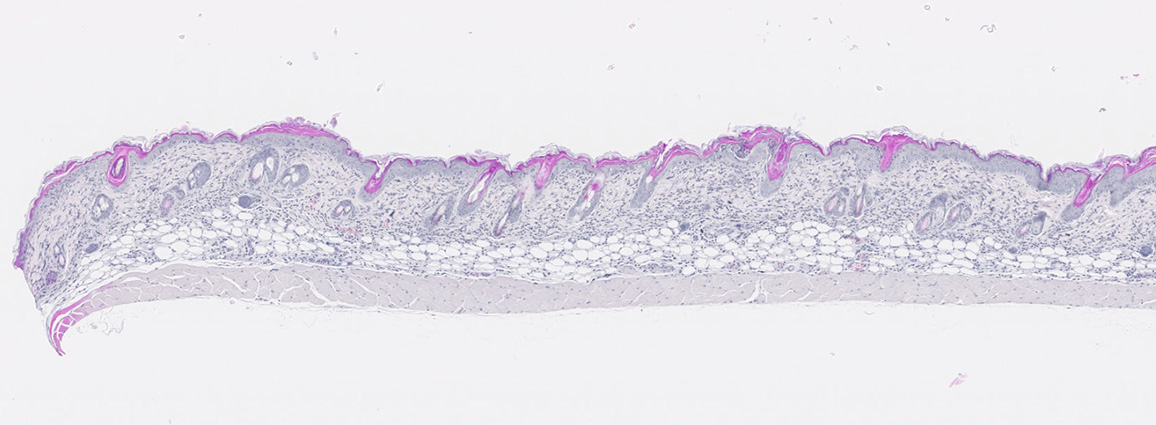
The purpose of adding scratching behavior to an atopic dermatitis study is not to replace inflammation-related biomarkers, histology or clinical scoring. Histology characterizes changes in tissue structure. Molecular and cellular biomarkers demonstrate changes in inflammatory pathways. Clinical scores capture visible disease severity.
Scratching behavior adds an additional dimension: whether these biological changes are accompanied by improvement in an outcome functionally relevant to patients. Combining these complementary endpoints can therefore provide a more complete picture of therapeutic efficacy.
This also changes how researchers should think about model selection. A model should not necessarily be chosen because it produces the greatest inflammatory response, the highest clinical score or the clearest histological changes. It should be selected according to the question the study needs to answer, and the specific endpoints required to effectively answer it.
For compounds intended to globally improve patient symptoms, including itch, in atopic dermatitis, this means considering whether the selected strain can reliably detect changes in disease-induced scratching behavior in addition to facilitating more conventional biological indications.
During experimental design and model selection, it is therefore critical to understand how a compound will ultimately be evaluated in the clinic and ensure that clinically relevant outcomes are meaningfully reflected and assessed during preclinical studies.
Key takeaways for researchers:
- Start with the translational question. Consider which outcomes will matter in the clinic and whether your preclinical plan can meaningfully assess them.
- Select models with your endpoints in mind. The strain that produces the strongest disease phenotype may not provide the clearest functional or behavioral readout.
- Look beyond conventional measures of efficacy. Improvements in biomarkers, histology and clinical scores do not necessarily predict improvements in patient-relevant symptoms such as itch.
- Combine complementary endpoints where appropriate. Functional and behavioural readouts can add valuable context to molecular, cellular and histological data.
- Prioritize standardization. Strain, stress, habituation, recording duration, treatment timing and group size can all influence the reliability of behavioral data.

If you would like to learn more about our atopic dermatitis and skin disease models, please contact our team: