
Validated mouse models for preclinical endometriosis research
Endometriosis is a common gynecological disorder affecting around 10% of women of reproductive age. Diagnostic tools for patients are currently insufficient, with imaging tools such as MRI still unable to systematically confirm the presence or absence of lesions, and the accuracy of the diagnosis depending highly on the expertise of the radiologist. Laparoscopic surgery remains the only method able to provide a certain diagnosis when imaging is negative despite evocative symptoms. Preclinical endometriosis mouse models play a crucial role in the identification of imaging tracers and blood tests able to detect endometriosis, and in the development of compounds able to relieve symptoms and cause lesion regression.
Developing much needed new diagnostic and therapeutic tools for endometriosis involves the use of in vivo models reproducing the mechanisms of the disease. Oncodesign Services provides translational mouse models addressing a variety of inflammatory diseases, including endometriosis, and provides CRO support for de novo development of new therapies.
Selecting endometriosis mouse models for preclinical studies
Introduction to endometriosis
Endometriosis is a complex and often painful medical condition in which tissue similar to the lining of the uterus grows outside the uterus. There are two major medical challenges in the field of endometriosis: developing non-invasive sensitive and specific diagnostic tools and developing treatments alleviating symptoms in patients and ideally causing lesion regression or slowing down lesional spread.
Endometriosis is often associated with chronic pelvic pain, dysmenorrhea (painful menstruation), and pain during intercourse. Approximately 30-50% of women with endometriosis may also experience infertility due to the impact on the reproductive organs. Furthermore, cyclic inflammation and bleeding of ectopic endometrial tissue can cause adhesions and scarring in the pelvic region, leading to organ dysfunction and pain.
Endometriosis imposes significant healthcare costs, including diagnosis, treatment, and management of associated complications. Women with endometriosis may experience reduced work productivity due to symptoms such as pain and fatigue. Finally, this condition can affect daily functioning, leading to a decrease in the overall quality of life for those affected.
Currently, no effective treatment exists for endometriosis. Patients care relies mostly on symptom alleviation with painkillers, and cycle interruption with hormonal drugs, or hysterectomy in extreme cases. Laparoscopic excision surgery remains the solution of choice in the presence of invasive lesions.
Endometriosis: Modeling a complex disease pathology
Preclinical research often involves the use of animal models, such as rodents (mice and rats) and non-human primates. In the context of treatment development, they are used to assess the safety, pharmacokinetics and efficacy of potential therapeutic agents, including, in the context of endometriosis, hormonal therapies, anti-inflammatory drugs, painkillers, and targeted therapies. They can also be used to test the accuracy of diagnostic tools such as blood tests or imaging tracers.
Mice are commonly used due to their genetic tractability and relatively low cost. Our recommended endometriosis model consists of inducing endometriosis-like lesions by injecting endometrial fragments into the peritoneal cavity of mice. The severity of the inflammation caused by the lesions as well as the invasiveness of the lesions can, for example, be aggravated by substance P addition.
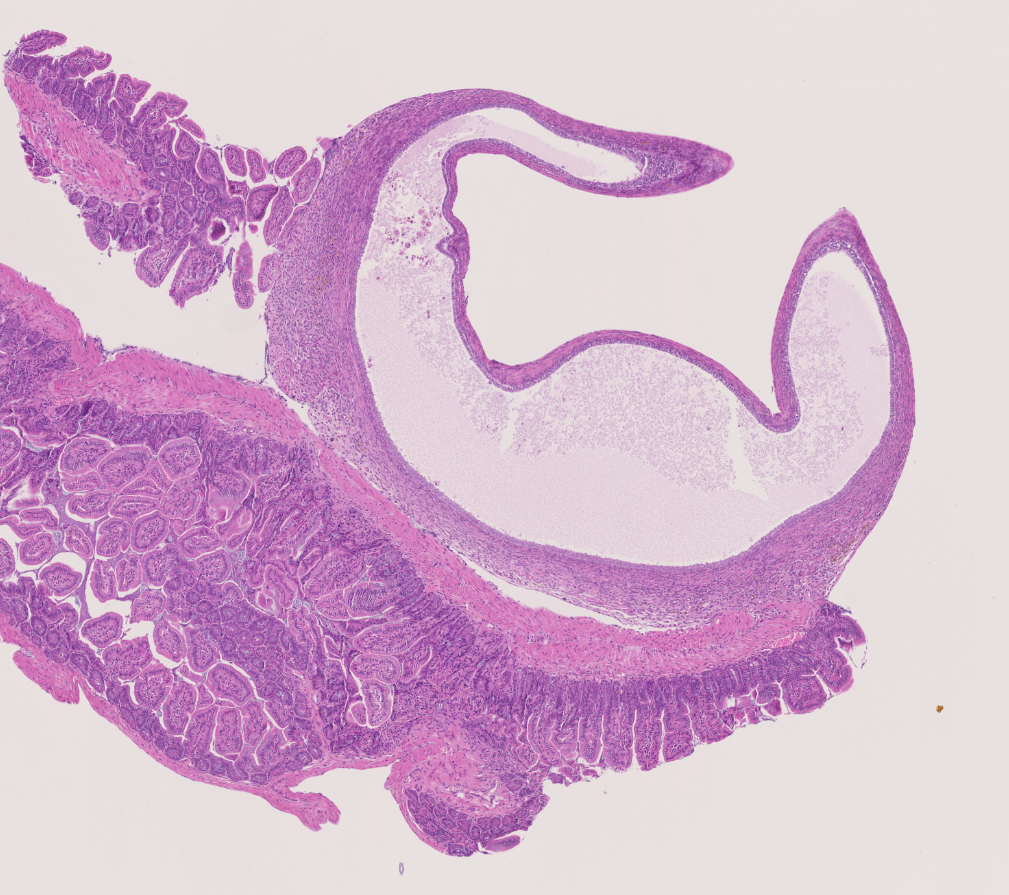
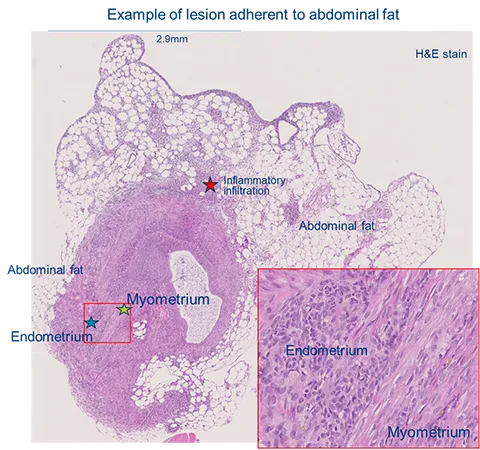
Confirm model suitability before study initiation: To support confident model selection, histology samples from established endometriosis research models can be accessed ahead of full study commitment. Immunohistochemistry (IHC) or FISH analyses may be performed to assess target expression and tissue localization, helping confirm biological relevance before program initiation.
Our typical readouts for endometriosis mouse models:
- Lesion size, weight and number
- Gene expression
- Fibrosis quantification
- Inflammatory cell infiltration quantification
- Peritoneal lavage fluid cell populations identification (FACS)
- Imaging (MRI) of lesions
Learn more about our murine inflammatory disease models
Oncodesign Services offers CRO services for preclinical models addressing a variety of inflammatory, fibrotic and auto-immune pathologies, and provides support for de novo development of new models.
Talk to our team today to find out more about the models and services available to support your endometriosis research, learn how we partner with research teams creating innovative therapies for inflammatory diseases, and to request a quote:
Frequently asked questions about our endometriosis mouse models:
Is Oncodesign Services able to source human lesions for in vitro work?
Yes. Thanks to our trusted partners, we are able to create a supply chain of surgically removed patient lesions based on your needs and specifications, such as patient profile. These lesions can then be used to support your preclinical work, by looking at target expression via IHC, qRT-PCR or FISH.
Is a standard of care (SOC) included in endometriosis experiments?
Unfortunately, no standard of care currently exists as of now, as patients are mostly given pain medication to manage crises, hormonal therapy to block menstrual cycles, and may undergo surgery if lesions are functionally impacting pelvic organs such as the bladder or the rectum. Therefore, no standard of care can be included in our preclinical experiments.
When using endometriosis mouse models, should I start treatment before lesions are fully implanted or wait until they are fully mature?
In our mouse models, lesions typically establish over the course of 28 days. The treatment timeline has to be chosen carefully based on knowledge of the mechanism of action, intended use in patients, and desired effect (e.g. pain relief vs inflammation relief). For instance, when testing a compound whose mechanism of action should impact lesional spread in patients, it would make sense to start treating the animals very early, as the induction process will be mimicking the spreading process.
Our in-house experts are available to help guide, advise and assist with study planning and design before your experiments begin.
Can Oncodesign Services establish new models based on a publication or previous work from other groups?
If our off-the-shelf models do not 100% correspond to your exact need, we are able and eager to establish new models for you based on published work or available protocols. This can mean establishing the model in a different strain or species, in transgenic animal models, with a different induction approach (e.g. surgical) etc. Do not hesitate to reach out to us with your desired model information.