

Validated GvHD mouse models for preclinical research
GvHD mouse models are experimental systems used in preclinical research to simulate and study the pathophysiology of Graft-versus-Host Disease, a potentially severe inflammatory complication that can occur after allogeneic hematopoietic stem cell transplantation (HSCT), with up to 50% of patients undergoing GvHD in that context.
In GvHD, immune cells from the transplanted donor tissue recognize the recipient’s tissues as foreign and mount an immune response against them, leading to tissue damage and inflammation. GvHD models are valuable tools to investigate the underlying mechanisms of the disease and to test potential therapeutic interventions.
In vitro and in vivo models for new GvHD therapies
Oncodesign Services developed GvHD mouse models to understand the pathophysiology of GvHD, test potential therapeutic interventions, and optimize treatment strategies, using a combination of in vitro and in vivo platforms. In vivo models include allogeneic (mouse–to–mouse) models, as well as xenogeneic (human-to–mouse) models:
- Allogeneic GvHD models are performed in mice, where hematopoietic cells are transplanted from one mouse strain (donor) into another (recipient) with a different genetic background. This sets the stage for immune cells to recognize the host tissues as foreign and induce GvHD.
- Xenogeneic GvHD models involve engrafting human hematopoietic cells (mostly human peripheral blood mononuclear cells, PBMC) into immunodeficient mice. This approach allows researchers to study GvHD in a setup in which the immune component responsible for the disease is human, and provides a platform for testing human-specific therapeutic interventions. This procedure also mimics the individual variability of donors.
Standard readouts in GvHD mouse models:
- Body weight
- Kaplan-Meier survival analysis
- Disease scoring
- Engraftment and phenotypic analysis
- Histopathology
- Cytokine analysis
- Flow cytometry
In vitro models can be used to further investigate specific aspects of GvHD, such as the interaction between donor T cells and recipient cells.
Confirm model suitability before study initiation: To support confident model selection, histology samples from established GvHD research models can be accessed ahead of full study commitment. Immunohistochemistry (IHC) or FISH analyses may be performed to assess target expression and tissue localization, helping confirm biological relevance before program initiation.
GvHD preclinical case studies
-
Xenogeneic GvHD
One xenogeneic GvHD model is based on the transplantation of human donor cells into NOG immuno-deficient mice, with monitoring over 30+ days. Cyclosporine is typically used as a reference compound, with partial efficacy.
In this study, NOG mice were transplanted intra-peritoneally with human PBMCs. Flow cytometry was performed for longitudinal monitoring of the frequency of human T cell populations (hCD45+hCD3+CD4+ or hCD45+hCD3+CD8+) in the blood. Human immune infiltrates were also observed in tissues such as the gastro-intestinal tract.
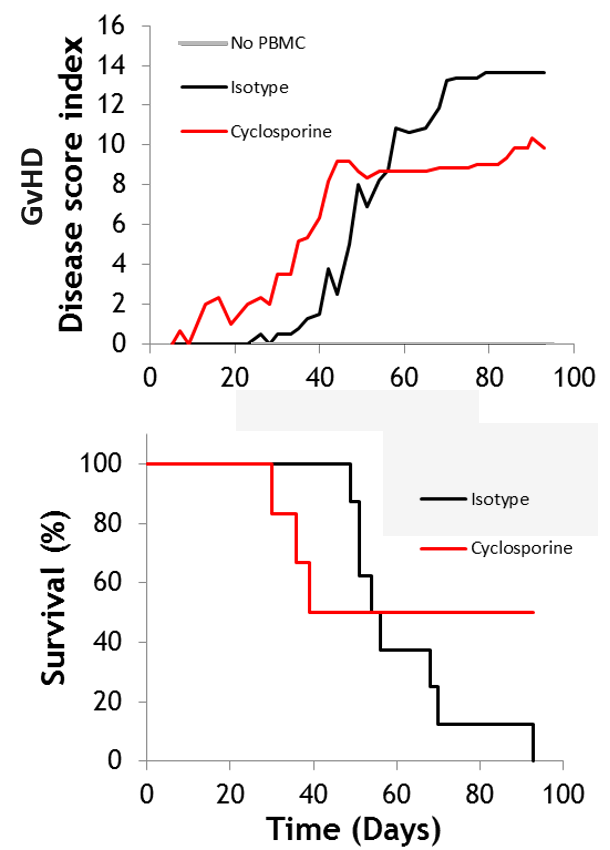
Above: Longitudinal monitoring of GvHD parameters in human PBMC-transplanted NOG mice. Top: GvHD clinical score. Bottom: Animal survival rate.
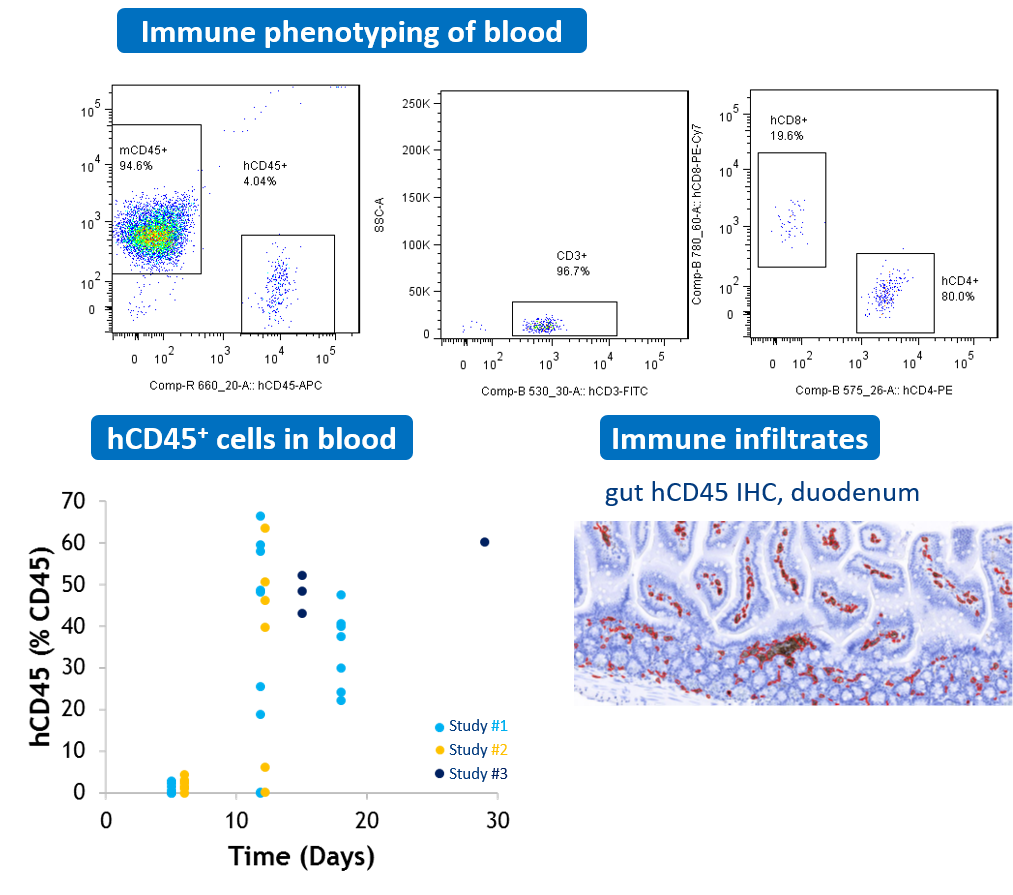
Above: Monitoring of human immune cell accumulation in human PBMC-transplanted NOG mice. Top: Flow cytometry gating strategy for the detection of human CD4+ and CD8+ T cells (mCD45–hCD45+hCD3+hCD4+hCD8– cells and mCD45–hCD45+hCD3+hCD4–hCD8+ cells, respectively). Bottom left: Frequency of human leucocytes in blood over time. Bottom right: Representative image of human leucocyte infiltrates (immuno-histochemistry staining for hCD45) in the intestine.
Learn more about our GvHD models
Oncodesign Services offers CRO services for preclinical models addressing a variety of inflammatory, fibrotic and auto-immune pathologies, and provides support for de novo development of new models. Our highly experienced inflammation team can work with you to select models and design studies with the translational relevance required to underpin strong funding applications and advance confidently to the clinic.
Talk to our team today to find out more about the models and services available to support your GvHD research, learn how we partner with research teams creating innovative therapies for inflammatory diseases, and to request a quote:
Frequently asked questions about our GvHD mouse models:
Can Oncodesign Services develop a customized GvHD mouse model tailored to the specific needs of my preclinical program?
Yes, Oncodesign Services can design and implement customized graft-versus-host disease (GvHD) models to meet the specific scientific and translational requirements of your preclinical program. Our teams work closely with you to define the most appropriate model parameters, including species, disease induction, study endpoints, and readouts, ensuring the model aligns with your therapeutic strategy and development objectives.
Is it possible to use humanized (transgenic, target-specific) mice as donors in GvHD models?
Yes, it is possible to use humanized transgenic mice, engineered to express a specific human target, as donors in GvHD models when scientifically appropriate. Our teams collaborate with you to evaluate feasibility and to optimize donor selection, study design, and experimental parameters, ensuring the model is well aligned with your preclinical objectives and translational strategy.