


Imiquimod-induced psoriasis models for preclinical pharmacology studies.
Evaluate therapeutic activity using established Iimiquimod psoriasis models in mice and rats. Our experienced inflammation scientists can help you select the appropriate model, dosing strategy and endpoints for your program, with assessments including clinical scoring, histology, biomarkers and behavioral studies.
Where required. studies can be tailored to your compound, mechanism of action and development objectives.
Psoriasis model suitability and evaluation methods
Psoriasis is a chronic immune-mediated inflammatory skin disease characterized by excessive keratinocyte proliferation, resulting in thick, scaly plaques, skin inflammation, and varying degrees of itching and discomfort.
Oncodesign Services provides established Imiquimod-induced psoriasis models in both mice and rats to evaluate therapeutic efficacy and investigate mechanisms of action. Evaluation is available in vivo, ex vivo and in vitro.
Confirm model suitability before study initiation: To support confident model selection, histology samples from established psoriasis models are available for feasibility studies prior to full study commitment. Immunohistochemistry (IHC) or FISH analyses may be performed to assess target expression and tissue localization, helping confirm biological relevance before program initiation. We currently have samples available for Imiquimod-induced mice and rats, and immune-deficient Imiquimod-induced NOG mice.
Preclinical evaluation typically includes following parameters in psoriasis models:
- Clinical scoring
- Transepidermal water loss (TEWL)
- Skin histology and gene expression
- Skin biomarkers analysis
- Flow cytometry
- Plasmatic cytokines
- Scratching studies to assess pruritus
Applying Imiquimod-induced models for preclinical psoriasis research
Imiquimod is a synthetic compound that activates toll-like receptor 7 (TLR7), triggering a Th1-Th17 immune response and inflammation similar to the biology of psoriasis in humans. For this reason, Imiquimod is commonly used to induce disease-like pathology in preclinical psoriasis models.
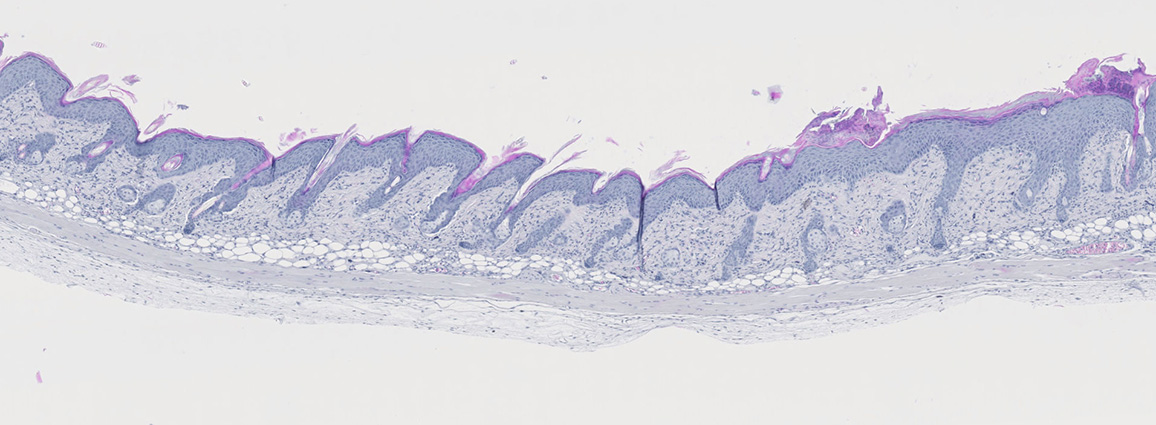
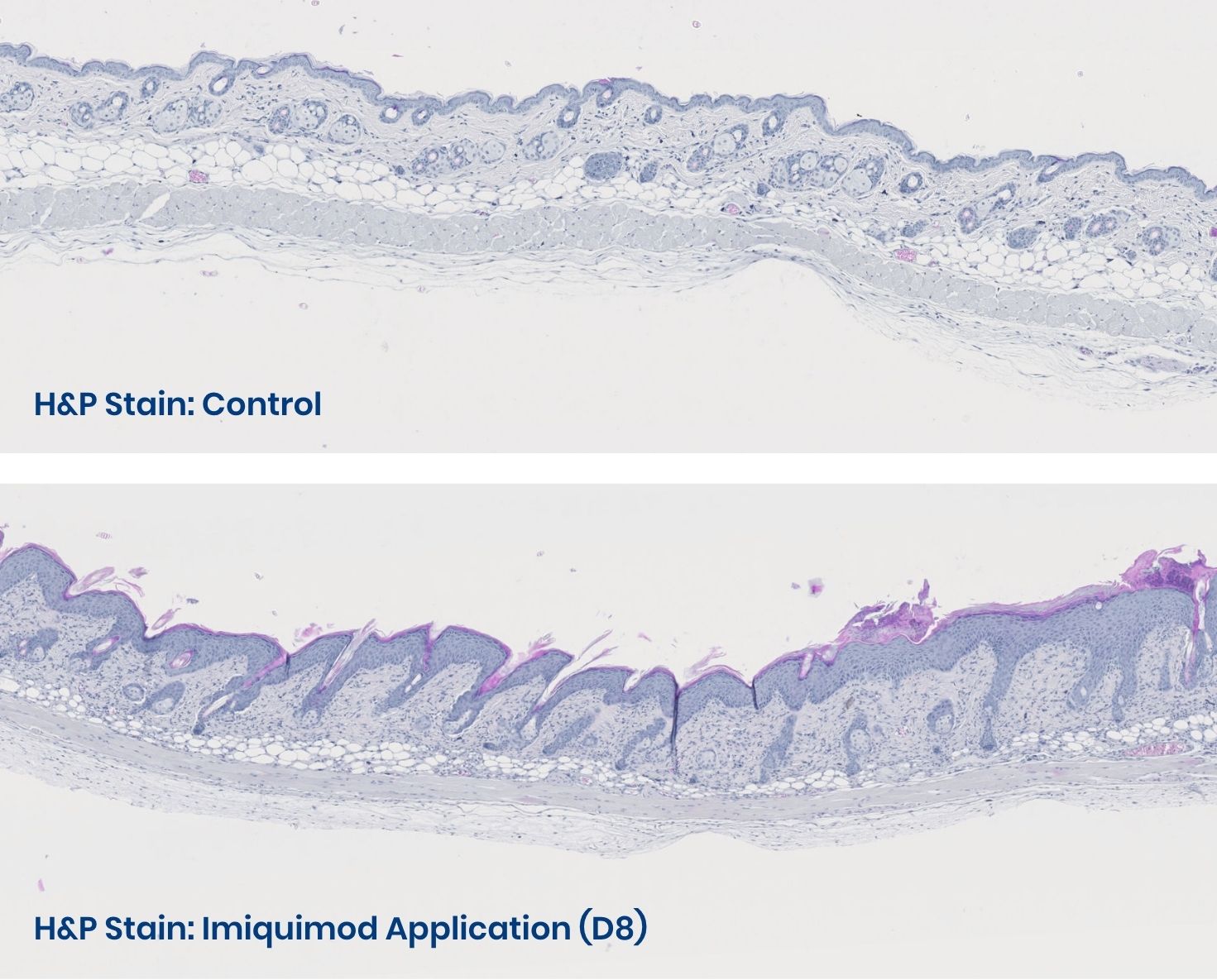
See above: Histological comparison of healthy skin and Imiquimod-challenged skin in mice (H&P stain). Imiquimod-challenged animals show increased epidermis and dermis thickness and inflammatory infiltrates in the skin.
Route of administration for Imiquimod (IMQ):
Imiquimod induction is performed through the daily topical application of IMQ cream on mouse back skin to induce lesions:
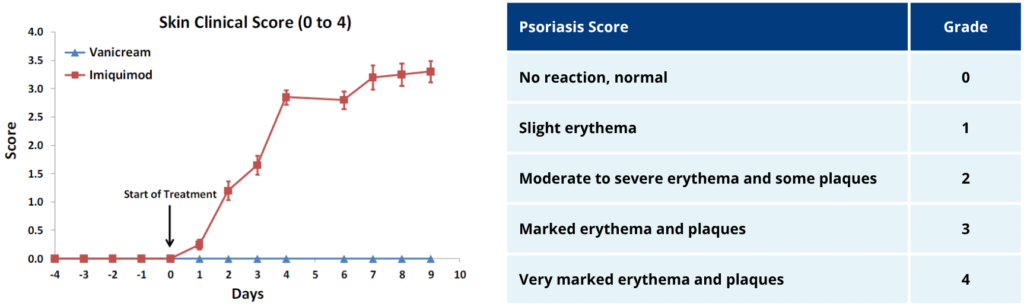
Example Readout: Validation of positive control drugs in Imiquimod model of psoriasis
Psoriasis can result as dysregulation of the TH17 pathway, and TH1 to TH17 cell differentiation critically depends on the RORgt transcription factor. Phosphodiesterase-4 (PDE4) is critical for the release of IL-12, IL-23 and TNFa.
Test compounds acting on RORgt (antagonist) and PDE4 (inhibitor) have demonstrated efficacy in psoriasis.
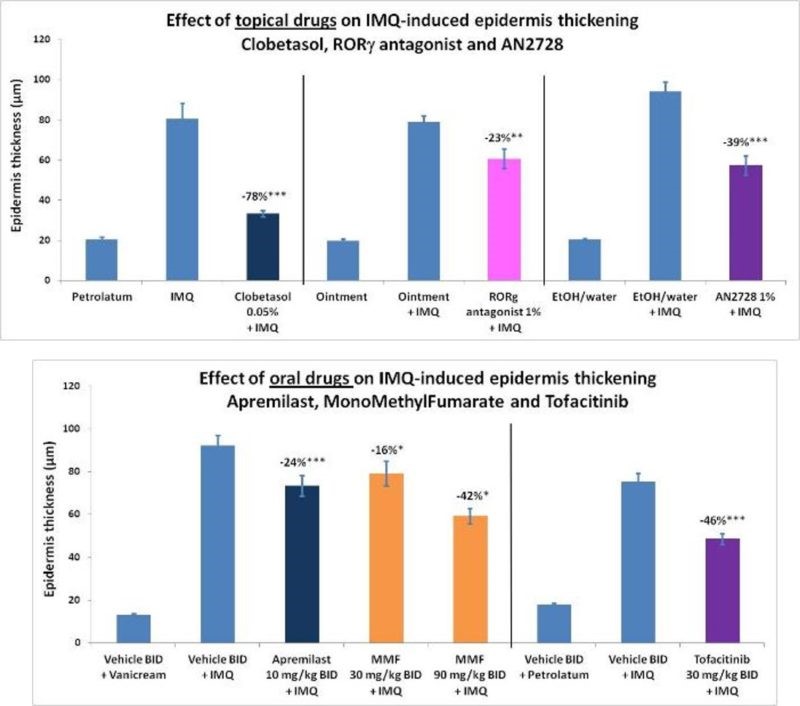
Psoriasis models consistently respond to oral and topical drugs showing clinical efficacy in psoriatic patients (treatment administered QD for topical drugs, BID for oral compounds):
- Oral drugs: Apremilast (PDE4 inhibitor), Monomethyl Fumarate (NFE2L2 inhibitor), Tofacitinib (JAK inhibitor)
- Topical drugs: Clobetasol (corticosteroid), RORgt antagonist, AN2728 (PDE4 inhibitor)
Here we can see the comparative effect of topical (top) and oral (bottom) reference compounds in Imiquimod-induced models of psoriasis.
Learn more about partnering with Oncodesign Services:
Oncodesign Services combines translational inflammation experience with a flexible approach to preclinical research, supporting both standard and customized study designs. Alongside an extensive portfolio of acute and chronic inflammatory disease models, we offer bespoke model development to address specific scientific questions and emerging therapeutic approaches.
Our scientific team is available to provide guidance from study planning through data interpretation, with comprehensive readouts including histology, clinical scoring, biomarkers, and functional endpoints. Histology samples are also available to support feasibility assessments and model selection before study initiation.
Contact our team to discuss your research objectives, explore the most appropriate models and endpoints, or request a quotation.
Oncodesign Services (ODS) has been a trusted preclinical partner for several years. The team consistently demonstrates scientific excellence and reliability, tailoring preclinical protocols to our exact needs.
Their ability to rapidly action and deliver projects has made collaboration in oncology research efficient and straightforward. Clear, responsive communication is crucial to us, and the strong working relationship with our client manager makes coordination very easy.
We appreciate the professionalism, confidence, and flexibility ODS brings to every project.
Oncology Biopharma Organization (Europe)


Frequently asked questions about our psoriasis models
In psoriasis studies, which inflammatory pathways are evaluated?
Our Imiquimod-induced psoriasis models enable investigation of the major pathways involved in psoriasis, including:
- IL-23/Th17 signaling
- IL-17A and IL-17F
- TNF-α
- IL-22
- IFN-γ
- Keratinocyte activation and proliferation
- Innate immune responses
Which species do you use?
Most psoriasis studies are performed in mice using well-established protocols. Model selection is based on your therapeutic target and scientific objectives. The rat imiquimod-induced model has also been validated at Oncodesign Services, and humanized animals can be utilized when this is the best course forward for your program.
How long does a typical psoriasis study take?
Study duration depends on the selected model and experimental design. Acute imiquimod-induced studies are typically executed within 1–2 weeks, while chronic or customized protocols may require longer study periods.
Contact our team to get an idea of how quickly we can begin your study, plus your expected study duration.
How do I choose the right psoriasis model for my therapy?
Our inflammation scientists can recommend the most appropriate model based on your therapeutic target, mechanism of action, route of administration, and stage of drug development, helping you generate meaningful and translational preclinical data.