


CDX Models

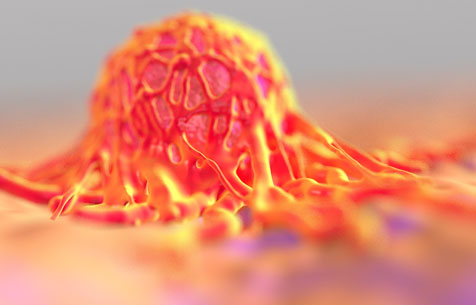
Cell Line-Derived Tumors Xenograft models (CDX) are developed for the research and testing of new therapies against cancer. In translational research, human tumor samples are cultured as cell lines and implanted into immunodeficient mouse. The objective is to evaluate the efficacy of new compounds in vivo.
CDX models give you quality data and predictive information of how the new therapy will perform, before entering into clinical trials.
Example of popular human CDX models:
| Breast | BT-474 | MDA-MB-231 | MX-1 | MDA-MB-468 | MCF-7 |
| Brain | U87MG |
| Blood | MV4.11 | Raji | Ramos | K-562 | Karpas-299 |
| Colon | HCT-116 | Ls174T | COLO-205 | HT-29 | LoVo |
| Kidney | BB64-RCC | A-498 |
| Liver | Hep3B | HepG2 | SK-HEP-1 |
| Lung | NCI-H460 | NCI-H1975 | Calu-6 | A-549 |
| Ovarian | NIH.OVCAR3 | A2780 | SK-OV-3 | PA-1 |
| Prostate | PC3 | LnCap.C4.2 | PC-3 | 22rv1 | MDA-PCa-2b |
| Pancreas | As-PC1 | BxPC3 |
| Stomach/Gastric | AGS | Hs 746T |
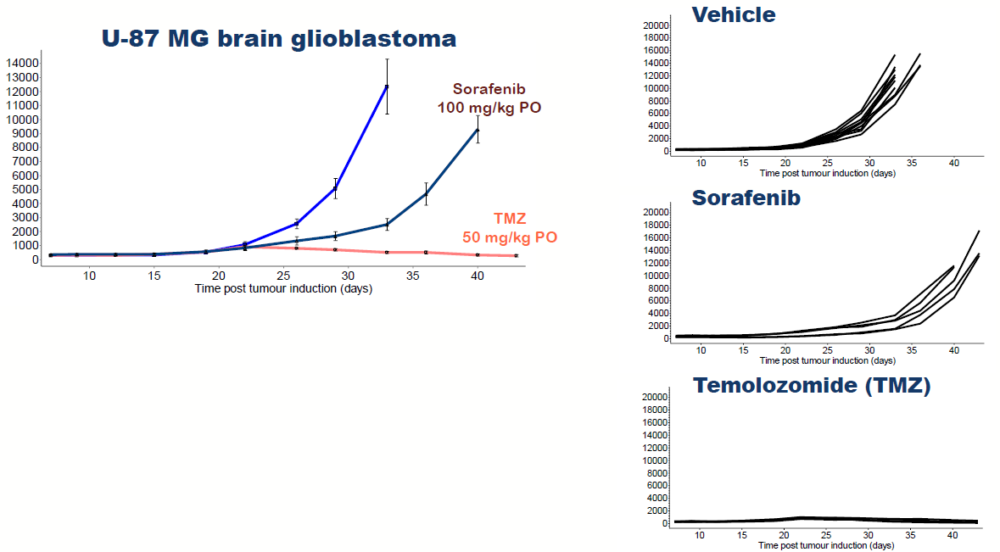
Glioblastoma multiforme (GBM) remains one of the most aggressive and treatment resistant brani tumors. Here, the U-87 MG human glioblastoma cell live was used subcutaneously in rats. The antitumor efficacy of two therapeutic agents was individually evaluated using tumor volume reduction as the primary endpoint.
We observed different profiles of response: exponential tumor growth in the negative control animals after about 30 days, delayed tumor growth with agent S and prevented tumor growth with agent TMZ (SOC for this pathology).
Do you need CDX models for your research programs?