



Evaluate therapeutic response in established multiple sclerosis models.
Evaluate whether your candidate can alter disease progression using established acute and relapsing-remitting EAE multiple sclerosis models. Oncodesign Services helps you align model selection, study design, and treatment strategy with your mechanism of action, generating evidence that supports clearer preclinical development decisions and progression to the clinic.
Preclinical models for assessing experimental autoimmune encephalomyelitis (EAE) multiple sclerosis
Neurodegenerative diseases, including multiple sclerosis (MS), primarily affect the central nervous system, leading to the progressive loss of structure or function of neurons. MS affects the brain and spinal cord, causing immune-mediated damage to myelin and nerve fibers and leading to impaired nerve signal transmission, and motor, sensory, visual, and cognitive dysfunction.
Oncodesign Services provides in vivo models for multiple sclerosis, enabling the assessment of MoA, drug response, target validation, efficacy and non-GLP toxicology.
In vivo multiple sclerosis models:
- Acute experimental autoimmune encephalomyelitis (EAE) / non-relapsing multiple sclerosis (MS) model in mice
- MOG35-55 peptide-induced
- Remitting-relapsing experimental autoimmune encephalomyelitis (EAE) / relapsing multiple sclerosis (MS) model in mice
- PLP139-151 peptide-induced
Typical Readouts for preclinical EAE multiple sclerosis studies:
- Clinical scoring
- Body weight monitoring
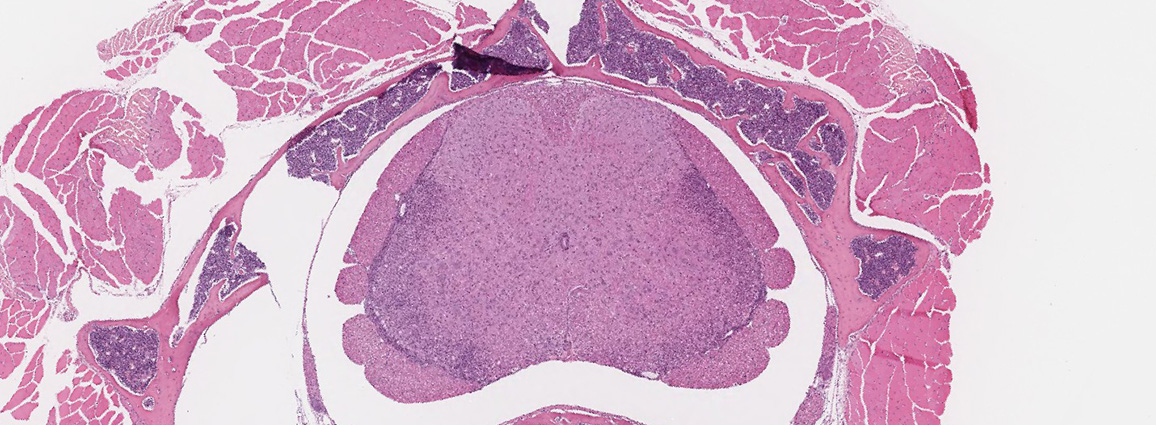
- Histopathology (e.g. demyelination and immune cell infiltration)
- Biomarker monitoring
- Drug monitoring
- Genomics
- Flow cytometry
- Motor function assessment
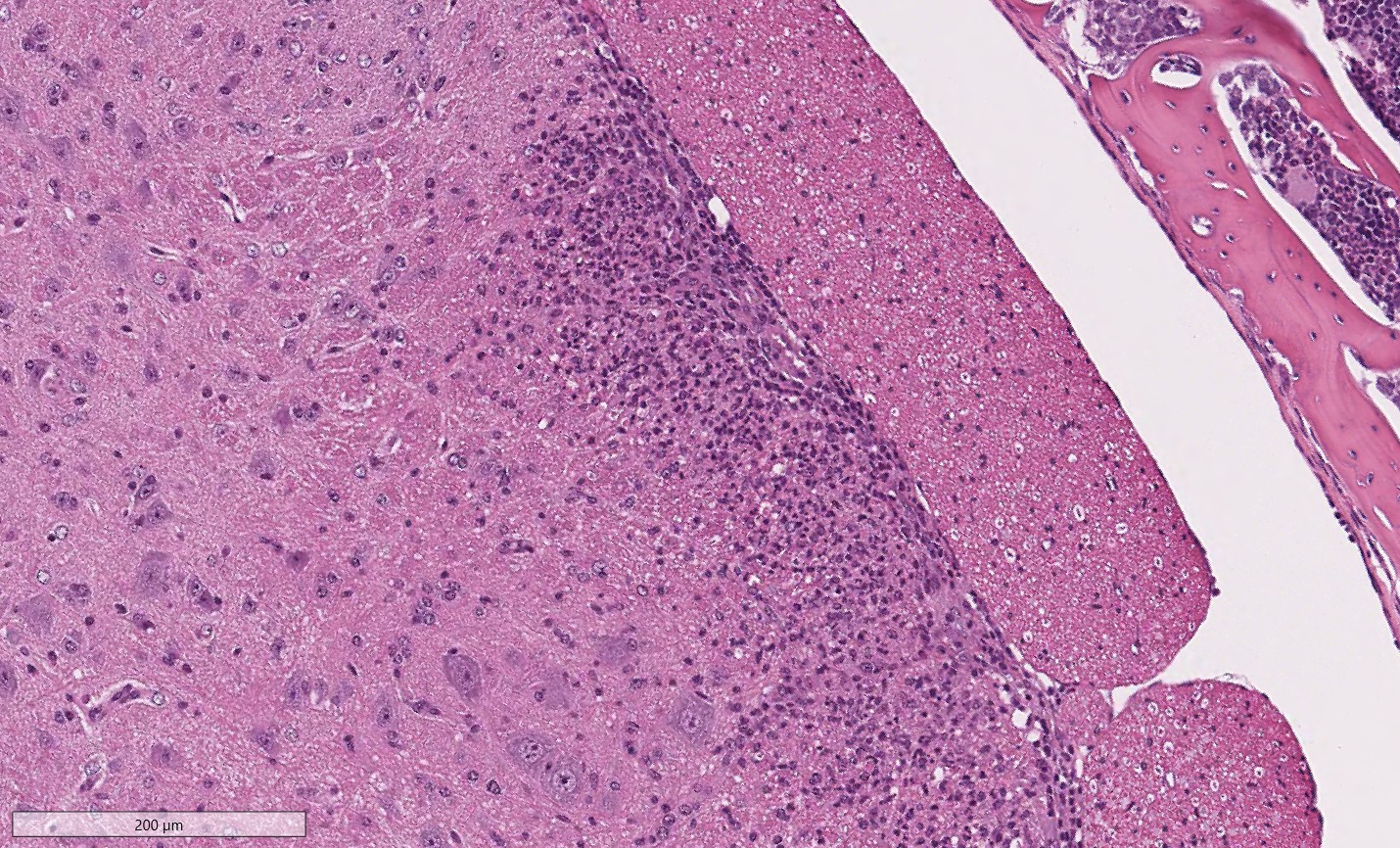
A zoomed view of MOG-induced spine pathology image with H&E stain. Mixed inflammatory cells can be seen with neutrophil infiltrates, vacuolation of the white matter with axonal fragments and apoptotic cells.
Example: Recreating EAE multiple sclerosis disease pathology via MOG-immunization
The myelin oligodendrocyte glycoprotein (MOG)-induced experimental autoimmune encephalomyelitis (EAE) model is one of the most widely used preclinical models of multiple sclerosis (MS). Immunization with a MOG peptide, typically MOG₃₅₋₅₅ in C57BL/6 mice, induces an autoimmune response against central nervous system myelin. This results in immune cell infiltration, demyelination, axonal injury, and progressive neurological deficits that resemble key pathological features of MS. The model is extensively used to investigate disease mechanisms, including neuroinflammation and immune dysregulation, and to evaluate the efficacy of immunomodulatory and neuroprotective therapies. Its reproducibility and well-characterized disease course make it a valuable tool for translational MS research.
Disease progression in the MOG-induced EAE model is monitored through a standardized clinical scoring system that evaluates the onset and severity of neurological deficits, ranging from tail weakness to complete hindlimb and forelimb paralysis. Clinical scores are recorded daily to assess disease incidence, onset, peak severity, and recovery. Additional readouts include body weight monitoring, motor function assessments, histopathological analysis of demyelination and immune cell infiltration, and molecular evaluation of inflammatory and neurodegenerative biomarkers. Together, these endpoints provide a comprehensive assessment of therapeutic efficacy and disease progression.
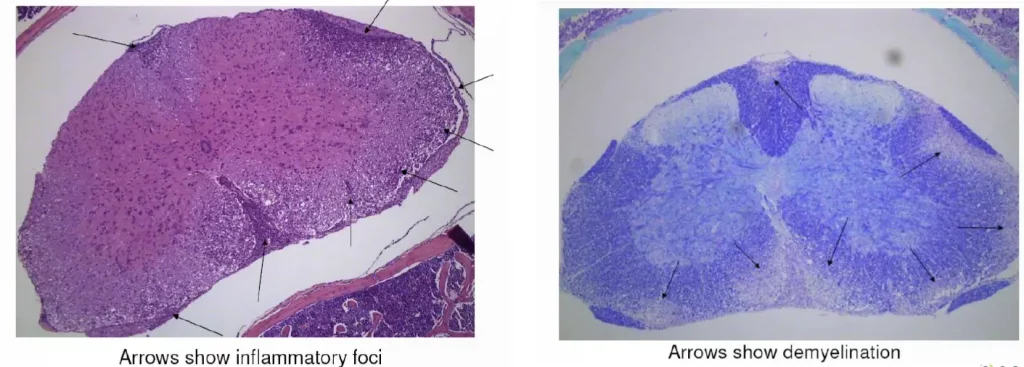
Left: H&P stain, arrow indicating inflammatory infiltrates into spinal cord. Right: Luxol Fast blue/Cresyl violet stain, arrows indicating foci of demyelination. Areas of immune infiltration and demyelination overlap.
Learn more about partnering with Oncodesign Services:
Oncodesign Services combines translational inflammation experience with a flexible approach to preclinical research, supporting both standard and customized study designs. Alongside an extensive portfolio of acute and chronic inflammatory disease models, we offer bespoke model development to address specific scientific questions and emerging therapeutic approaches.
Our scientific team is available to provide guidance from study planning through data interpretation, with comprehensive readouts including histology, clinical scoring, biomarkers, and functional endpoints. Histology samples are also available to support feasibility assessments and model selection before study initiation.
Contact our team to discuss your research objectives, explore the most appropriate models and endpoints, or request a quotation.
Oncodesign Services (ODS) has been a trusted preclinical partner for several years. The team consistently demonstrates scientific excellence and reliability, tailoring preclinical protocols to our exact needs.
Their ability to rapidly action and deliver projects has made collaboration in oncology research efficient and straightforward. Clear, responsive communication is crucial to us, and the strong working relationship with our client manager makes coordination very easy.
We appreciate the professionalism, confidence, and flexibility ODS brings to every project.
Oncology Biopharma Organization (Europe)



Frequently asked questions about our multiple sclerosis models:
How is multiple sclerosis disease progression monitored?
Disease progression is evaluated using a standardized clinical scoring system that measures neurological deficits throughout the study. Animals are monitored daily for clinical signs, body weight, and overall health, allowing assessment of disease onset, progression, peak severity, and recovery.
Can multiple sclerosis studies be customized?
Yes. We tailor study protocols to your research objectives, including:
- Preventive or therapeutic dosing regimens
- Route of administration
- Study duration
- Biomarker selection
- Tissue collection schedule
- Functional and mechanistic endpoints
Which species are used as EAE multiple sclerosis models?
We primarily perform MS studies in mice using well-established strains, such as C57BL/6 mice for MOG₃₅₋₅₅-induced EAE. Alternative models may be considered depending on the scientific objectives. Studies can include humanized mice where this provides benefit to your program.
Do you perform histopathology?
Yes. Our pathology services include:
- H&E staining
- Luxol Fast Blue staining for myelin
- Immunohistochemistry
- Quantification of demyelination
- Inflammatory lesion assessment
- Axonal injury analysis
- Digital pathology and image analysis
How long does a typical EAE multiple sclerosis study take?
Study duration depends on the experimental design, but most MOG-induced EAE efficacy studies are performed over 3–6 weeks, including disease induction, treatment, clinical monitoring, and endpoint analyses.
Contact our team to discuss when we can start your study, and the projected time to complete.